LIFE TIME ACHIEVEMENTS
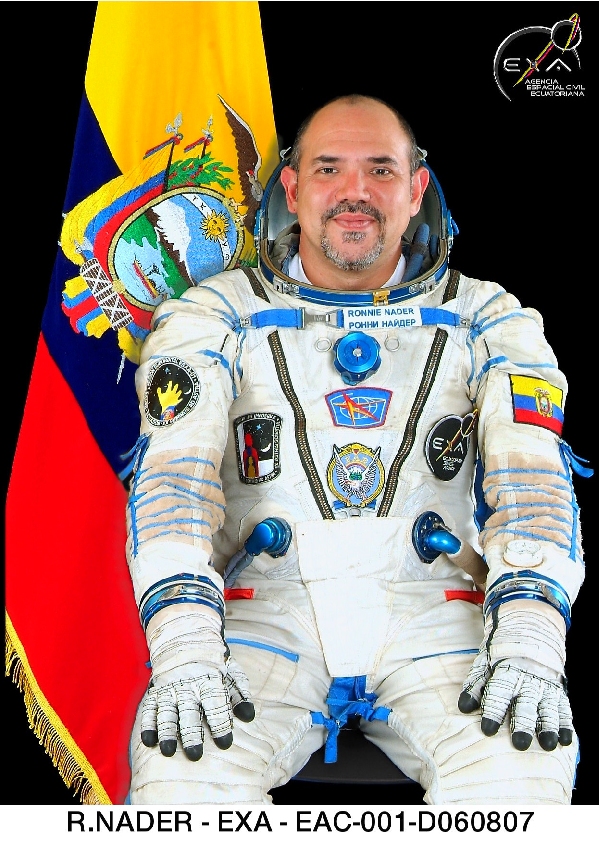
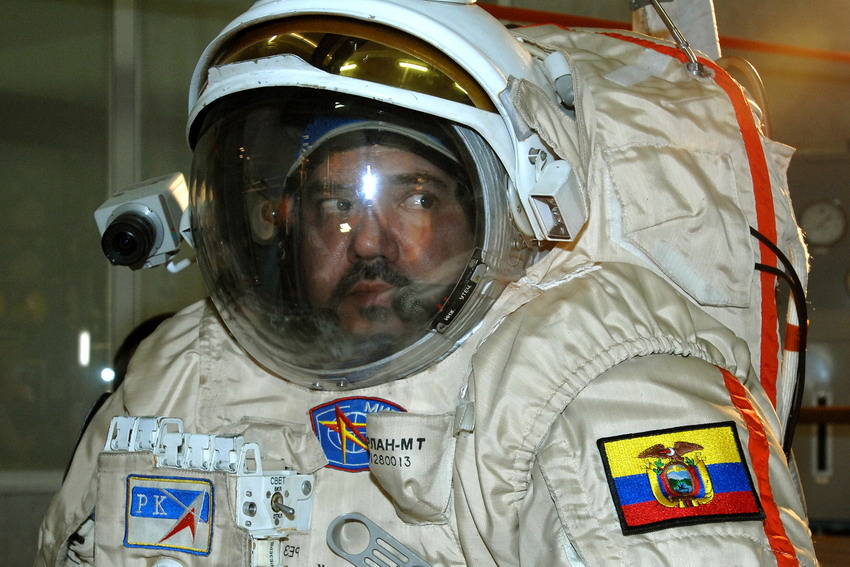
First Ecuadorian Astronaut, 2007
Designer of the Ecuadorian Space Program, 2007
Designed and flown the 1st Latin American microgravity plane, 2008
Achieved the Microgravity world record, 2008
Built the first National UV Reactive Alert Network, 2008
Designed and built the first Internet-to-Orbit gateway. HERMES-A, 2009
Designed and built the 1st Ecuadorian satellite, NEE-01 PEGASUS. 2011
Designed and built the 2nd Ecuadorian satellite, NEE-02 KRYSAOR. 2012
Launched the 1st and 2nd Ecuadorian satellites, 2013
The first functional rescue operation on nano satellites, 2014
Responsible for turning Ecuador into the first latinamerican country to
export its indigenous space technology to the world, 2016
Founder of the Practical Interplanetary Propulsion initiative (AIAA/NFFP),
2020
The only person in history to be the first astronaut of a country and
the father of its first satellite.
PROFESSIONAL EXPERIENCE
Space
Operations Director for the Ecuadorian Space Agency. 2007 to date
Mission Commander for the DAEDALUS missions, 8 missions flown, 2008
Mission Commander for Project POSEIDON - Microgravity world record
2008
Chief Engineer of the HYPERION - National UV Reactive Alert Network
2008
Chief Designer of Project HERMES - The first Internet-to-Orbit
gateway. 2009
Chief engineer and team leader that built the 1st Ecuadorian
satellite, the NEE-01 PEGASUS. 2011
Chief engineer and team leader that built the 2nd Ecuadorian
satellite, the NEE-02 KRYSAOR. 2012
Mission Director for NEE-Alpha satellite constellation launch and
operation. 2013 to date
Mission Supervisor for IRVINE01 mission on the IRVINE Cubesat
STEM Program, 2015 to date.
Mission Director for the lunar project SPACEBIT - ASAGUMO, 1st lunar
commercial mission of the United Kingdom.
Director of the Practical Interplanetary Propulsion Group of the AIAA
Nuclear and Future Propulsion T/C - 2020
ACADEMIC MEMBERSHIPS
IAF
Space Security Committee - Permanent Member
American Institute of Aeronautics and Astronautics - AIAA Senior Member
AIAA/NFFP-TC Practical Interplanetary Propulsion Group - Chairman
American Association for Advancement of Science - AAAS - Fellow Member
Planetary Society - Member
International Academy of Astronautics - IAA Senior Member, Engineering
Sciences (M2)
ACADEMIC DEGREES
Systems Engineer - Universidad Católica
Santiago de Guayaquil - UCSG - 1994
Astrobiology Professor - TERC - 2001
Academician - IAA - 2017
AWARDS AND HONORS
First Ecuadorian Astronaut,
Ecuadorian Air Force - June 2007
One of 9 most successful men in Ecuador, HOGAR mag., July 2007
Medal 'Example for Youth' of Ecuadorian Gov., October 2007
Man of year, Ecuador, 2007
One of 4 most successful Ecuadorians, December 2007
Global Citizenship Award 2010 - March 2010
Hall of Fame of Lebanese descendants - November 2010
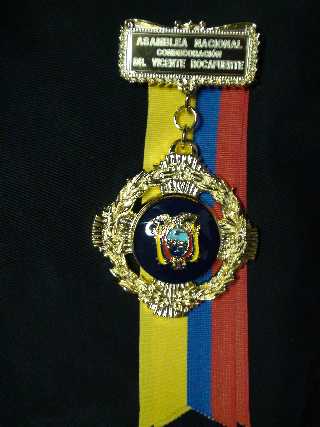
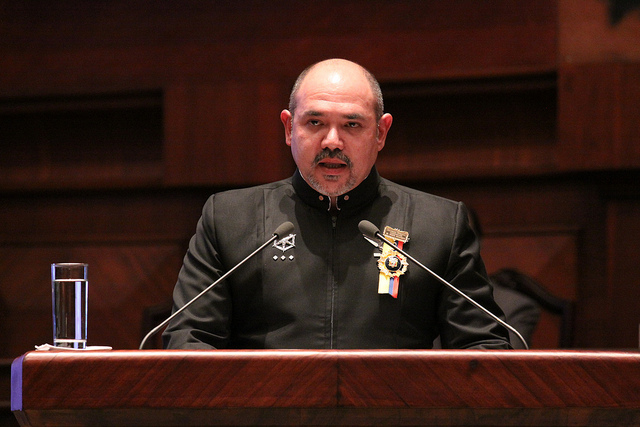
National Congress Medal VICENTE ROCAFUERTE to Scientific Merit - May
2011
Wall of illustrious Professionals of Universidad Católica Santiago
de Guayaquil, 1994 Best Alumni, May 2012 SCIENTIFIC MERIT Municipal
Award - City Council of Samborondon - Ecuador - 2012
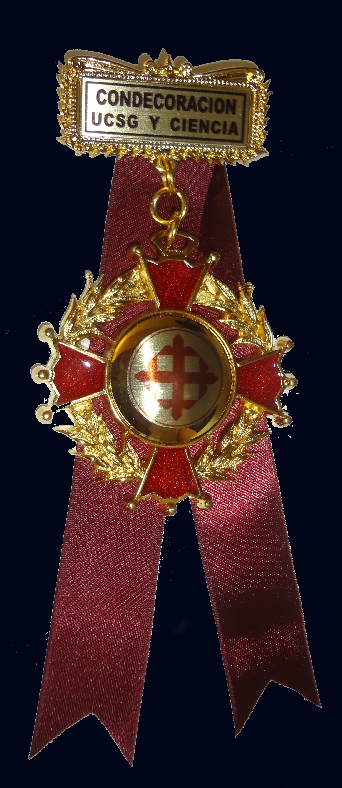
Medal University and Science - Universidad Católica Santiago de
Guayaquil, May 2013
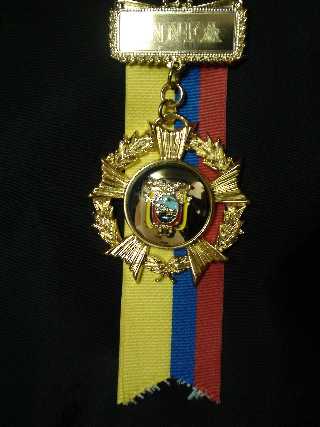
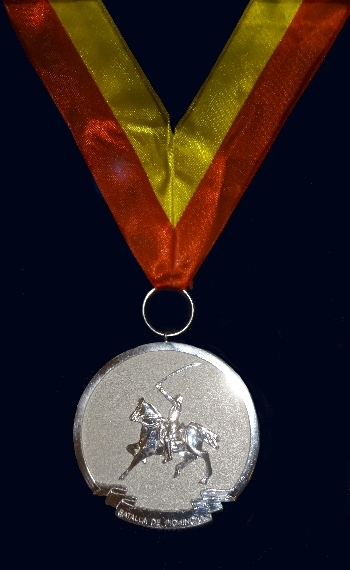
Medal Battle of Pichincha - M.I. Provincial Council of Pichincha
Province, May 2013
Medal Joint Armed Forces for Exceptional Services to the Nation -
Joint Chiefs of the Armed Forces - Ecuador - 2013
LaSalle SCIENTIFIC EXCELLENCE Award - LaSalle Ex-Alumni National
Board - Ecuador - 2013
IAC 2015 Ambassador - International Astronautical Federation - 2015
IAF GRULAC Vicepresident - International Astronautical Federation -
2016
IAF GRULAC President - International Astronautical Federation - 2017
IAA Elected Lifetime Member - International Academy of Astronautics
- 2017
AIAA Elected member for the Nuclear and Future Flight Propulsion
(NFFP) Technical Committee - 2019
Chairman of the Practical Interplanetary Propulsion Group of the
AIAA NFFP - 2020
BIO AND HISTORY
Ronnie Nader Bello
was born in Guayaquil, Ecuador July 10 1967. at
the age of 13 started studies of nuclear physics on its own and within
three years won first prize in the physics category of the first
national scholastic contest, capturing first prize again the following
year. In 1984 commenced studies in astrophysics, graduating first in his
high school class of 1986.In 1987
starts pioneering research in artificial intelligence in Ecuador,
He graduated
with an MS in systems engineering MCL in 1994 from the Universidad Catolica
Santiago de Guayaquil, where he was the director of the campus computer
lab until 1995, the same year he started his specialization in
Cybernetics in the PCP Project, also in 1995, began research in
Astrobiology.
Completed the TERC astrobiology teaching certification course in
2004, In 2006 started the development of the ‘Ecuador al Espacio’
Project, (Project ESAA) a privately funded astronautics initiative,
aimed to start the Ecuadorian Civilian Space Program, the first
civilian, non-governmental space program in history aimed to explore
and help the development of the suborbital space, with the main
emphasis in taking scientific experiments made by educational
institutions at no cost for them, in order to help raise interest in
science and to awake consciousness of the benefits for Ecuador in
exploiting the suborbital and GEO resource.
In 2007 the
project is recognized by the General Command of the Ecuadorian Air
Force (FAE) as the first Ecuadorian initiative in astronautics in
the history of the country and he as the first Ecuadorian astronaut
candidate.
On June 8 2007 Ronnie Nader becomes
officially the
first Ecuadorian astronaut in history
when completed
the
ASA/T (Advanced Suborbital Astronaut /Trained)
training program designed on the Gagarin Cosmonaut Training Center
on Moscow, Russia.
During the ASA/T
training he imposes some new records, a high gravity tolerance
record of 8.6 G's on the Nizhny Novogorod
air base, during a training flight on the MiG-29UB
jet fighter, added to the fact of flying
at 21 kms. at an speed of 2734 km/h (Mach 2.4)
during MiG-31E stratospheric
training, turns him into the Ecuadorian
citizen that has endured more gravity, flown higher and faster,
accordingly to the Ecuadorian Air Force (FAE) records.
He was also excused from the course of Orbital Mechanics during ASA/T
training because he could prove to his instructors that his
knowledge level in this science was far superior that the
requirements of the program.
In August 29 2007
publishes the Ecuadorian Civilian Space Program first and to date
only space program in the world to be managed and operated by an
NGO, at the same time he announces the creation of the
EXA, the Ecuadorian Civilian Space Agency, the first space
agency in the history of Ecuador.
In October 4th 2007
mans the
first aerospace exercise on Ecuador's aeronautics history,
executing a simulation of suborbital jump on board of a Mirage F1JE
of the Ecuadorian Air Force, manning the mission specialist post on
board the plane and reaching 6.1 G's.
On October 12 2007
he is awarded the 'Example for Youth' medal by the Ecuadorian
government.
On November 15 2007
proposes to
FAE the
project DAEDALUS, a scientific
project of his conception that will give the first Latin-American
microgravity plane to Ecuador, positioning the country as third in
the world after the US and Russia in acquiring this technology by
its own means and resources.
On April 10
2008 flies at the command of the first
aerospace research mission in Ecuadorian history, the
EXA/FAE-01, designed to capture
microgravity flight parameters using a device of its design and
making, the MGCP-MK3 on board of the
Mirage F1JE and achieving microgravity for
301 seconds.
This is the first mission of project DAEDALUS,
EXA and FAE
grants him the position of Aerospace Mission Commander
-CMAE-
On
May 6 2008 flies at the command of the second
aerospace research mission the EXA/FAE-02 onboard of the Sabreliner T-39 of FAE, achieving for Ecuador, alongside the
Ecuadorian Air Force, the
first
Latin-American microgravity plane. the plane is then rechristened
Fuerza-G Uno Cóndor
On June 19th 2008, flying at the Scientific Mission Command
of the EXA/FAE-06 Aerospace mission,
achieves for Ecuador the first world record, certified by GuinnessTM
of the
Youngest Human Being in Microgravity, when a fluid
dynamics scientific experiment is performed on board by his sons,
Gerard (10) and Jules (7) this last one now holds the record in the
name of Ecuador,
this was possible due the development of an special training program
called YMTP
developed by Nader for this project.
On October 22 2008,
EXA publishes the HIPERION report,
proving the depletion of the ozone layer over the equatorial
region of the planet, and also verifying that extreme levels
of UV radiation are reaching Ecuadorian, Peruvian and Colombian
territory, Nader was the head of the project HIPERION and designed
the HIPERION Reactive
Alert Network, which provides protection to more than 4 million
ecuadorians by the means of providing them
accurate and real time information about
UV levels for them to take action immediately, such network is the
first in the country's history
and up to date the most technologically advanced
in the region.
On September 8 2009, EXA announces the
existence of PROJECT HERMES, the
first Internet-to-Orbit gateway, during the
Small Satellites for Sustainable Developement symposium
organized byt the UNOOSA, the European Space Agency and the Austrian
Government: Ronnie Nader, the father and designer of the system is
invited then to demonstrate its use and to train scientists and
engineers of 34 countries in its use for the benefit of mankind all,
which is done successfully 2 days later, on September 10. This
becomes the first time that an Ecuadorian project is entitled with
such importance by the international astronautical community.
In November 2009, EXA launches the
A SATELLITE IN CLASSROOM
program, a world-class pioneering program that allows a simple
desktop computer to be turn into a virtual ground station for
downloading real time images from the NOAA meteorological satellites
and to be put in the classrooms, for students of 6 years old an up,
giving them the opportunity to gain a unprecedented level of contact
with 21st century technology and to inspire in them the interest in
sciences. The system was designed and built by Nader from the
grounds of the DELTA operation mode of Project HERMES.
On March 25 2010, he
is presented with the prestigious Global Citizenship Award granted
every year by the board of Trustees of Academia Cotopaxi after a
rigorous selection to persons who have impacted their communities
and mankind all with their work. past winners includes an
ex-president and many prominent social activists.
On April 2010,
proposes the project PEGASUS, the building of the first Ecuadorian
satellite to the EXA Directorate, which is approved and put under
his control. He promises to deliver the satellite within a year.
On November 2010 he was selected for the
Hall of Fame of Lebanese descendants that have contributed to the
progress of Ecuador by the Lebanese Consulate in Quito.
On April 2011, a year after the project
approval, he delivers the fully functional and flight-ready
NEE-01 PEGASUS, the first
Ecuadorian satellite to the EXA Directorate, who presents it to the
world on April 4, 2011.
On May 13, 2011 the National Assembly
taps him to receive the
VICENTE ROCAFUERTE Medal for Scientific
Merit in name of the EXA, this is the highest national honor that is
only bestowed for exceptional scientific work in benefit of the
country. It has only been granted 4 times in Ecuadorian history.
On May 12, 2012 The Catholic University
of Guayaquil, his alma mater, reaching 50 years of existence,
selects him to join the wall of the 50 best professionals ever
produced by the institution, representing all the alumni that
graduated in 1994.
On August 2012 delivers the second
Ecuadorian made satellite, the
NEE-02 KRYSAOR.
On October 30 the EXA
receives the SCIENTIFIC MERIT Award from the M.I. Municipality of
Samborondon, the home town were the NEE-01 and NEE-02
satellites were created, Ronnie Nader receives the award from the
hands of the city Mayor in the name of EXA.
On February 28, 2013, leading the team
that traveled to Netherlands with the NEE-01 and NEE-02 satellites
for testing and space flight certification in the ISIS/ISL labs,
receives the Space
Flight Certification for both satellites from the ISIS/ISL
Director, confirming that the satellites he built and designed are
accepted for spaceflight in Chinese and Russians launch vehicles.
On
April 25, 2013 at 23h13 local time, onboard a LM2D rocket taking off
from the JiuQuan Cosmodrome the NEE-01 PEGASO launches into space,
13 minutes later is injected into orbit and more than 4 hours later
a radio amateur relays the first signal to CCVE ground control in
Guayaquil, The National Government transmits the launching operation
in national TV and the President sits in the CCVE ground control,
commanding the mission is Cmdr. Ronnie Nader who declares mission
success at 23h27 with the historic words "Welcome to the sky PEGASO,
Welcome to space Ecuador"
On
May 16, 2013 at 10h39 local time, from the Space flight Control Center
in Samborondon the first public live video feed from NEE-01 PEGASUS is
received and injected into the Internet, the mission director, Cmdr.
Ronnie Nader, establishes the link with the satellite and receives it
with the words "Welcome home PEGASO"
On May 17, 2013 The Catholic University
at Guayaquil imposes the "University
and Science" medal on him, for his contributions to the
advancement of science in the nation.
On May 22, 2013 The High Council of
Pichincha province imposes the Battle of Pichincha medal on him for
exceptional services to the nation in the scientific field.
On
November 21, 2013
commands the launch monitoring operation for the NEE-02 KRYSAOR, second Ecuadorian satellite
which lifts off towards the orbit onboard a Russian Dnepr RS20B, this launch
becomes world record for injecting 33 satellites into orbit at once, at
02h25m13s the NEE-02 KRYSAOR is delivered into its planned orbit. It
carries onboard the PERSEUS device.
On
January 25, 2014
commands the EXA's Space Operations team that successfully
recovers the operational status of the NEE-01 PEGASUS using the
PERSEUS device on board the NEE-02 KRYSAOR. Nader designed and built
the PERSEUS device himself.
Since 2015 leads the team that
achieves the firsts exports of space technology to the U.S. in 2016
and 2017. Also in that year he was elected as Corresponding Member
of the International Academy of Astronautics for the Engineering
Sciences section
In 2016 He was elected as Vice President for the International
Astronautical Federation's Latin America and Caribbean Group (IAF
GRULAC)
In 2017 he was elected IAA lifetime Member for the Engineering
Sciences Section and in the same year he was elected President for
the International Astronautical Federation's Latin America and
Caribbean Group (IAF GRULAC). The same year he presents the
LATCOSMOS space development program for Latino America to the IAF
GRULAC,
In 2018 during the IAC2018 in Bremen, Germany, he proposes the Latin
American Lunar Program, which officially begins with the signing of
the initial agreements with Astrobotic to begin lunar unmanned
missions in 2021.
On December 17, 2020, during the
bimonthly meeting of the Nuclear and Future Flight Propulsion
Technical Committee (NFFP), one of the oldest and most reputable
technical committees of the American Insitute of Aeronautics and
Astronautics, Ronnie Nader proposes the creation of a working group
with the sole purpose of producing designs for a motor capable of
reaching a maximum speed of 2% of the speed of light, in the next 10
years. The idea is that this development will allow humanity to
reach the worlds of the solar system in a practical time frame,
without having to wait years but only weeks to travel to those
worlds, thus opening up the practical colonization of the solar
system to humanity. A month later, this task force is created by the
committee and christened the Practical Interplanetary Propulsion
Group and Ronnie Nader is elected as its first president.
Ronnie Nader
is the first person in history to achieve the two most significant
milestones in astronautics for a country: To be its first astronaut
and the father of its first satellites at the same time, and, to date,
he is the only Ecuadorian representative to the
International Astronautical Federation (IAF)
General Assembly and the first and only Ecuadorian citizen to be
elected as a member of the International Academy of Astronautics, He
is also member of the American Association for the Advancement of Science
(AAAS), he as given dozens of lectures in
key scientific conferences around the world,
and published more than 40 scientific papers in which he was author
and co-author, he
speaks English, Spanish, Portuguese and Russian, he is
an amateur astronomer and
his favorite sport is the land sailing, he also enjoys reading,
martial arts and classical music as much as 80's music.